




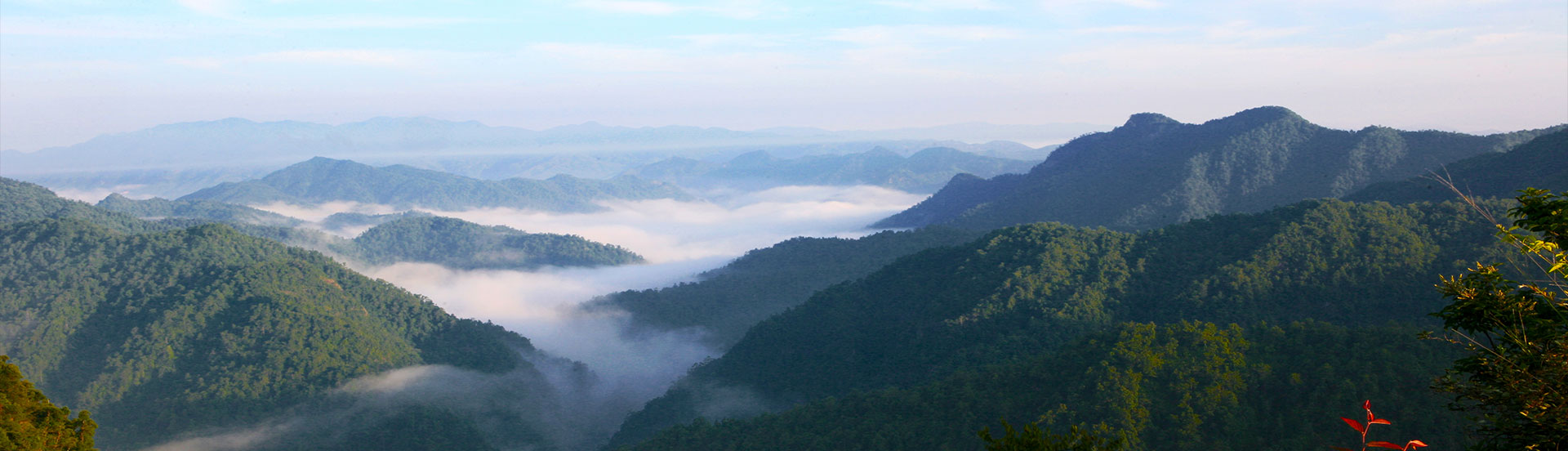

At the junction of southern Jiangxi and northern Guangdong, there is a 5A-level national scenic area. Its name is Sanba Mountain, also known as Sanbi Mountain.
Like any other famous mountain in the world, Sanba Mountain not only has treasures but also has stories.Here, ancient trees tower high, the water is clear, rare birds and exotic animals live here, and various flowers and plants are scattered throughout.This place was once the paradise of the Ganzhi people and a secret treasure land for generations of Anyuan people.It is not only the source of drinking water for Hong Kong residents but also a must-visit spot for tourists from home and abroad.
"Where mountains and rivers seem to lead nowhere, but then a glimmer of hope appears and another village comes into view."From a barren mountain area to a tourist destination, Sanbaoshan has become a timeless tale of nature and landscape.
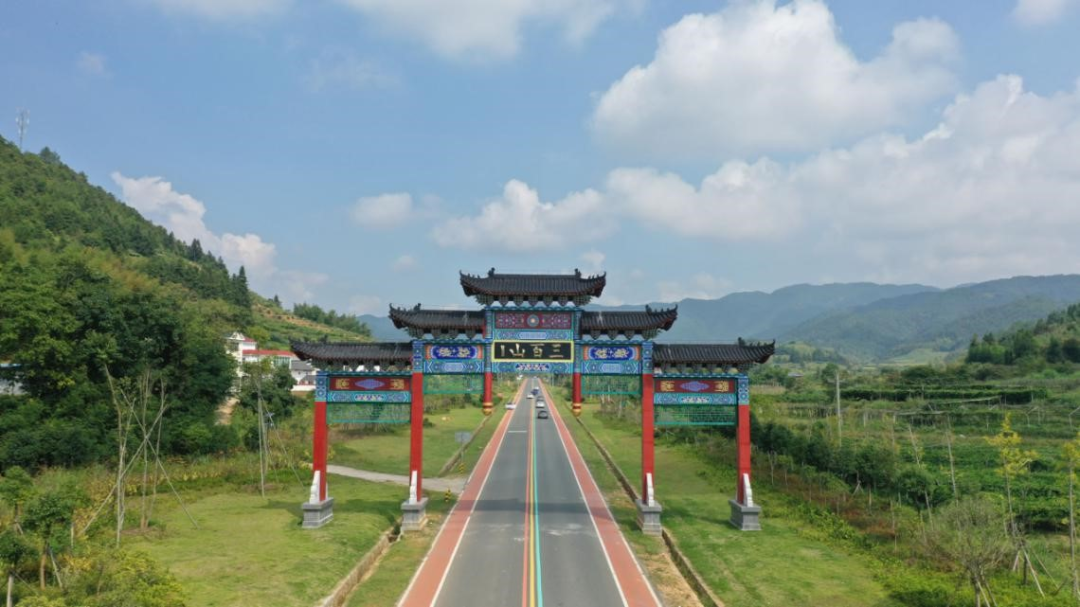
The former Giant Park of Ganjiang
The Sanbaoshan Mountain is located at the junction where the northern slopes of the eastern section of the Nanling Mountains and the western slopes of the southern section of Wuyi Mountain converge. It is collectively referred to as the various mountain peaks in the southeastern part of Anyuan County.It is approximately 30 kilometers long from north to south and 2.8 kilometers to 13 kilometers wide from east to west, covering an area of 197 square kilometers.Its general area encompasses the entire Sanbaoshan Town, most of Fengshan Township, the eastern part of Zhengang Township, the southeastern part of Xinhuan Town, and some villages in Gaoyunshan Township.
The origin of the name "Sanbaishan" is rather complex.Generally speaking, there are mainly five categories:
First, there is the "Three Hundred Pits Theory".In the earliest records of ancient literature, the term "Three Hundred Pits" was used.In the second volume of the "Ganzhou Prefecture Annals" of the Ming Dynasty's Jiajing period, "The Water of Three Hundred Pits" was introduced as follows: "Forty miles south of the county.It originates from Three Hundred Pits and flows eastward into Jiuzhou River, then connects with boats.It enters Longchuan River."Although it does not explicitly mention "Three Hundred Mountains", it does mention "Three Hundred Pits".The existence of Three Hundred Pits implies the existence of Three Hundred Mountains.Second, there is the "Three Hundred Mountain Peaks Theory".It states that there are three hundred mountain peaks within Three Hundred Mountain, approximately referring to an approximate number rather than a specific count.Third, there is the "Three Bao Gong Theory".Ancient people commemorated three righteous men, Chen Junting, Yang Junwang, and Hu Junqi, of the Ming Dynasty, and thus called it "Three Bao Mountain".In the local dialect of Anhui, "Bai" and "Bao" are pronounced the same, so "Three Bao Mountain" was confused with "Three Hundred Mountain".Fourth, there is the "Three Hundred Mu of Farmland Theory".It is said that in the Qing Dynasty's Qianlong era, a Chen family opened up three hundred mu of fertile land in the mountains, hence the name.Fifth, there is the "Three Hundred Mountain Sheds Theory".It is said that there are three hundred mountain sheds within Three Hundred Mountain, thus earning the name.
Due to its deep mountains and dense forests, as well as its vast expanse and sparse population, far removed from the hustle and bustle of the world, Sanba Mountain has been a paradise for various animals since ancient times, among which the Ganzhi Giants are not uncommon.
Regarding the "Gan Giant", as early as 2,000 years ago, there was such a description in "Shan Hai Jing": "In the south, there is the Gan Giant. They have human faces and long arms, black bodies with hair, inverted feet, and they laugh when they see people. Their lips cover their faces. So they run away immediately."The Gan Giants lived in the south. They were somewhat like humans, but not exactly human. They had very long arms, their entire bodies were black, and they were covered with hair.Their feet were in front and their toes were at the back, opposite to humans.Their mouths were very large, and when they laughed, their lips curled up, covering their faces.They were not close to humans and would run away as soon as they saw someone.

▲ In ancient times, Sanba Mountain was the paradise of the Ganzhi people.(AI-generated image)
The southern region mentioned in "Shan Hai Jing" is very extensive and vague.During the periods of the Jin, Southern and Northern Dynasties, as well as the Tang and Song Dynasties, historical records such as "Search for Gods" by Jin Dynasty's Gan Bao, "Strange Phenomena Record" by the Southern Dynasty's Zu Chongzhi, "Nan Kang Record" by the Southern Dynasty's Deng Deming, and "Taiping Huanyu Ji" by the Northern Song Dynasty's Le Shi, clearly mentioned the activities of "Shan Du" and "Mu Ke" in the southern region.From the relevant writings, the "Gan Giants" mainly operated in parts of southern Jiangnan and southern Lingnan, including Jiaozhou (now northern and central Vietnam, and parts of Guangdong's Leizhou Peninsula and southern Guangxi), Tingzhou (now Fujian's Changting County), Lu Ling (now Jiangxi's Ji'an City), and Qianzhou (now Ganzhou City). Among these, Tingzhou and Qianzhou were the most active areas.In Qianzhou alone, Shanglu Mountain in Gan County (now part of Xingguo County), Jun Mountain in Yudu (now part of Huichang County), and Sanbaishan in Anyuan were the main habitats of the "Gan Giants".
The earliest written record of the existence of the Ganzhi people in Sanba Mountain dates back to the Qing Dynasty's Jiaqing edition of "The Chronicles of Ganzhou Prefecture".In Volume Two, "Products", there is this passage: "The baboon, as mentioned in the 'Shan Hai Jing', is the Ganzhi people.Guo Pu's annotation states: 'It is actually Xiaoyang.'The county was named after the presence of these people."Following this record, the editor added a supplementary note: "The mountains and forests of Ganzhou are no longer there.This creature can only be found in Sanba Mountain in Anyuan County. Its deity is the most powerful...The tallest ones are about eight or nine feet tall, and the shorter ones are no more than six feet.The tallest ones are especially good at running.When people strike the gong and drive the group, they can cross several counties in a day and night."From this, we can see that by the Qing Dynasty's Jiaqing era, there were no Ganzhi people in the other mountains and forests. Only in Sanba Mountain in Anyuan County did the Ganzhi people still appear, and "its deity was the most powerful".Unfortunately, the specific way in which the Ganzhi deity was powerful is not mentioned in the book. It only states that the Ganzhi people were very good at running.
The alternative names for the Ganzhi Giant are numerous, including Baboon, Xiaoyang, Mu Ke, Shan Du, Shan Gui, Shan Xiao, Ren Xiong Jing, etc. The people of Anyuan simply call him Rong Jia Pai.Whether Rong Jia Pai is good or bad, ancient books do not mention it.However, in the folk of Anyuan, Rong Jia Pai is a devil-like figure.In the folk tales of Anyuan, Rong Jia Pai has very long hair, a very dark face, and is clawing and writhing, looking very terrifying.Due to its terrifying appearance and the fact that it can eat people, the folk often use the stories of Rong Jia Pai to scare children.
However, in some areas, the Ganzhongren people are different from those in Anyuan County (known as Rongjia'erna). They not only do not harm people, but also are very honest and even can write poems.
The "Geographical Records" of the Wei, Jin, and Southern and Northern Dynasties periods recorded that there were many "woodmen" on Shangluo Mountain in Ganxian County. They had human-like appearances and voices. One could see them from afar, but when approaching, they would hide themselves. There was a sense of being "out of reach yet within sight".The woodmen could cut down fir trees, split them into beams, and gather them at a high place.They also knew the trade skills and would exchange fir beams for the axes and hammers of the local people.
The renowned mathematician Zu Chongzhi also recorded an interesting incident in the "Records of Strange Phenomena".Both Nan Kang and Gan Xian counties have mountains there. The people living in these mountains build nests and dwell in the trees.。These mountains rarely appear, and it is rare to see them in normal times.In the first year of the Yuanjia era of the Southern Dynasties (424 AD), Dao Xun and Dao Xu, two brothers from Gan Xian County, went up the mountain and discovered a large zelkoon tree about twenty feet in circumference, hollow in the middle. In the hollow part of the tree, there was a nest of the mountain people.The brothers cut down the tree and took the nest back home.The mountain people saw them and said to the two brothers, "I am in a remote and desolate place.What do you have to do with me? There are plenty of big logs everywhere. Isn't that enough?There is my nest on the tree, but you cut it down.I will take revenge and burn your houses down!"Indeed, at night, the houses of the two brothers caught fire and were completely destroyed.
Interestingly, folk legends say that the wooden people could also compose poems."Don't ask for more wine when it's all gone; I'll start playing the lute.The cities are filled with noise and dust; I'll go back to the mountains to admire the bright moon."This poem from the "Complete Tang Poems" is said to have been written by a wooden person during the late Tang and Song dynasties.Thus, it can be seen that in the Tang and Song periods, there were always wooden people activities in the mountainous areas of southern Jiangxi.
Due to the lack of historical records, it is currently impossible to determine whether the Gigantes of Sanba Mountain are of the same species as the Shuduo and Muke in Ganxian, Nan'ang, etc. Nor is it known when and where the activities of Rong Jia'en took place.Perhaps, before human activities began, the Sanba Mountain area was already a place where the Gigantes could rest and thrive.Perhaps, not only Sanba Mountain, but the entire Anyuan County (including Xunwu County, which was separated from Anyuan County in the late Ming Dynasty) might have traces of the activities of the Gigantes.To this day, the story of Rong Jia'en is still widely told among the people of Anyuan and Xunwu counties.
In the 47th year of the Qianlong reign (1782), the population of An Yuan reached 180,714, which was approximately half of the current total population of An Yuan County.With the growth of the population, the deep and old forests of San San Shan were gradually developed, and the natural environment became increasingly unfavourable for the survival of the Gan giants.Coupled with human hunting activities, the number of Gan giants decreased sharply.
In the Qing Dynasty's Guangqing edition of "The History of Ganzhou Prefecture", there is a record about the hunting of the Ganzhou Giants.Regarding the disappearance of the Ganzhou Giants, the "Mountain and Rivers" section of the Qing Dynasty's Tongzhi edition of "The History of Ganzhou Prefecture" contains the following text: "Sanbo Mountain, eastward connected to Yangtian Lake, southward linked to Long'an and Fu Mountain forts. It was said that there were baboons there, which were the Ganzhou Giants.But now they are gone."The Qing Dynasty's Tongzhi edition of "The History of Ganzhou Prefecture" was compiled in the 12th year of Tongzhi (1873), which shows that as early as 1873, there were no Ganzhou Giants in Sanbo Mountain.
The gradually awakening Baoshan
Archaeological discoveries indicate that as early as the late Neolithic period 4,000 years ago, the Chigangling area on the outskirts of Sanbaoshan already had human habitation.Due to the vast and dense forest, the presence of wild beasts, and the remoteness from major transportation routes, it had been in a state of dormancy for a long time.Although there were some human settlements in the mountains, most of the villages were small and the population was scattered.The residents' livelihood was mainly based on farming and hunting, working from dawn to dusk and resting at sunset. The economic development was extremely slow.
During the reign of Emperor Jiajing of the Ming Dynasty, the "Guangzhou Prefecture Annals" had already recorded about Sanba Mountain. However, the description was brief and sparing of words, as if the author was being very careful with the words.In the Qing Dynasty during the reign of Emperor Qianlong, the "Anyuan County Annals" began to provide a clearer account of Sanba Mountain."Sanba Mountain: It connects with Xiu Tianfang Yantian Lake in the east, and links with Long'an and Fu Mountain forts in the south.There is the Iron Mountain Ridge, which produces iron.In the tenth year of the Qianlong reign, the county magistrate He Lan was ordered to investigate and found that there were damages to houses and tombs, and he issued a detailed prohibition order.It stretches for dozens of miles, with dense thickets and lush forests, steep cliffs and secluded valleys, monkey dens (Note: in the Qing Dynasty's Tongzhi edition of the "Anyuan County Annals", it is written as 'yóu'), deer, pigs, and numerous wild animals are hidden there.In spring and summer, waterfalls flow down, and the rapids and rocks clash.The water flows into the broad river."Yantian Lake is a relic formed by volcanic activity in ancient times. Its specific location is within the Dam Village of Xinhuan Town.The 'yóu' refers to macaques, 'yóu' is a type of long-tailed ape mentioned in ancient books, 'jǐ' is a small deer, 'shǐ' is pig, and here 'shǐ' refers to wild boars.From this passage, we can see that the area of Sanba Mountain is vast, starting from Xiu Tianfang (now part of Xinhuan Town) Yantian Lake in the east, and extending to Long'an Fort (roughly equivalent to today's Fengshan and Zhengang two townships) and Fu Mountain Fort (roughly equivalent to today's Sanba Mountain Town), stretching for dozens of miles.There are ancient trees and birds chirping everywhere;there are strange rocks and steep cliffs, and dangerous rapids and waterfalls.Streams flowing through the mountains converge as the source of the Dongjiang River, flowing southward, flowing out of Jiangxi Province, flowing into Guangdong Province, flowing to Hong Kong, and flowing into thousands of households.Streams flowing through the mountains converge as the source of the Dongjiang River, flowing southward, flowing out of Jiangxi Province, flowing into Guangdong Province, flowing to Hong Kong, and flowing into thousands of households.
The Sanbaoshan Mountain has at least three major treasures: one is iron ore, another is hot springs, and the third is the source of the Dongjiang River.
Within Fushan Fort lies the Iron Mountain Ridge, which borders Changning County (now Xunwu County).This area is rich in iron ore and has been mined since the early Qing Dynasty.Since most of the local people were unable to smelt iron, a large number of miners from other provinces and counties gathered in Fushan.There were also a group of scoundrels.They formed gangs, occupied the valleys, and illegally mined iron ore, which seriously affected the daily lives and production of local residents. Moreover, they damaged houses, farmlands, and tombs.Although the Anyuan County government repeatedly imposed restrictions, the ban was not enforced.What was even more serious was that in the seventh year of the Yongzheng reign (1729), the Changning County magistrate, Deng Peng, illegally permitted the people of Changning to set up a furnace for iron smelting here, which caused a major incident.Later, the Kaizhou Prefecture sent people to suppress it and dismantled the furnace.After a few years, the illegal mining trend resumed, creating a chaotic situation.In the tenth year of the Qianlong reign (1745), the Anyuan County magistrate, He Lan, reported the situation to the Jiangxi Provincial Administration and requested strict prohibition of mining.After approval, He Lan encouraged the local people to cultivate fields and plant crops. In areas where it was difficult to clear land for farming, trees and firewood were planted to meet future needs.He Lan's tree-planting and afforestation efforts set a good precedent for protecting the Sanbaoshan and the Dongjiang Source.
Apart from iron ore, the Sanba Mountain area also has "hot springs", which is what people nowadays call the Hugang Hot Spring.
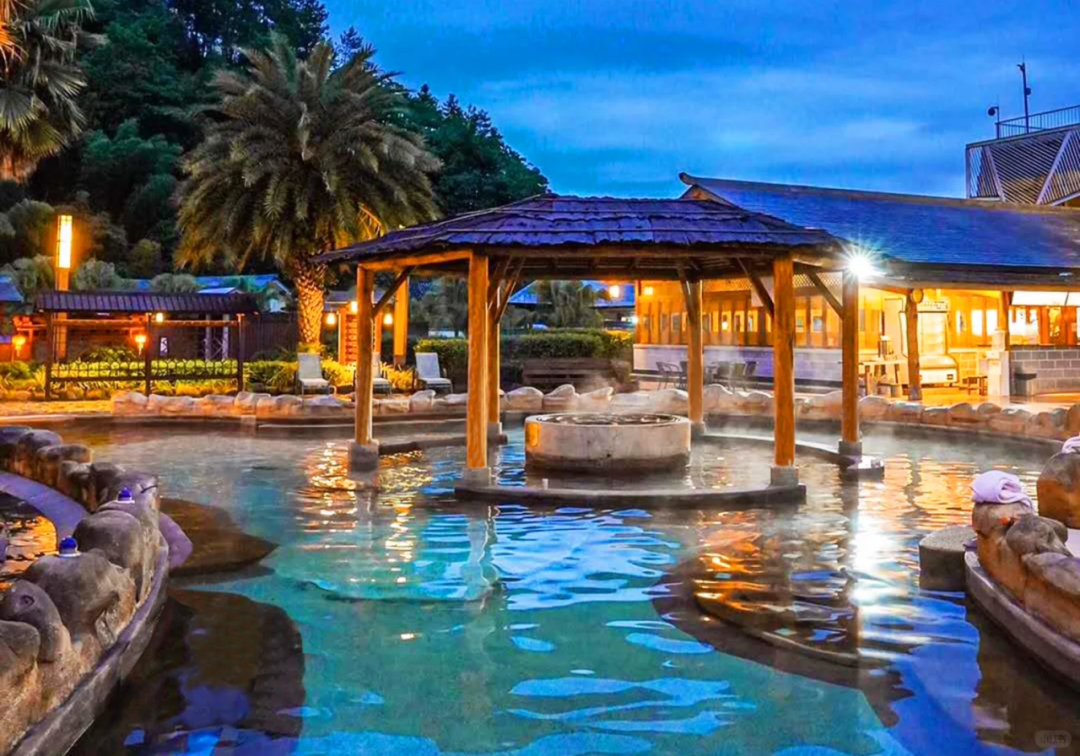
▲ Sanba Mountain Hot Spring Resort Hotel
The Huo Gang Hot Spring is located beside the Gong family's house in Huo Gang, Fushan Fort (now located in Sanbaoshan Town, Huo Gang Village). The spring water originates from the mountain and multiple streams of hot water overflow from the cracks in the quartz schist and granite.
Regarding the Huo Gang Hot Spring, an old county history records a story.During the reign of Emperor Jiajing of the Ming Dynasty, two outsiders came to Fushan Fort.They told the local people that the hot water of the hot spring was hot because there were "fire beads" underground.If the locals were willing to sell, they were willing to pay 100 taels of silver to buy the "fire beads".After hearing this, the locals were in a state of confusion.Some thought that 100 taels of silver could buy a lot of things, and this transaction was worthwhile.Some thought that the Huo Gang Hot Spring was a treasure bestowed by heaven upon the people of Huo Gang, Fushan and even the entire An Yuan area, and it was absolutely not something that could be sold for a small profit.Some also thought that although 100 taels of silver was not a small amount, if it was distributed to each household, each person would not receive much, and there was a possibility of causing discord due to the uneven distribution.It should be shared by generations to come as a gift from nature. Perhaps it is precisely this custom of respecting and protecting nature that has a long history. The people of An Yuan seem to have an inherent sense of responsibility to safeguard nature.
It should be shared by generations to come as a gift from nature. Perhaps it is precisely this custom of respecting and protecting nature that has a long history. The people of An Yuan seem to have an inherent sense of responsibility to safeguard nature.
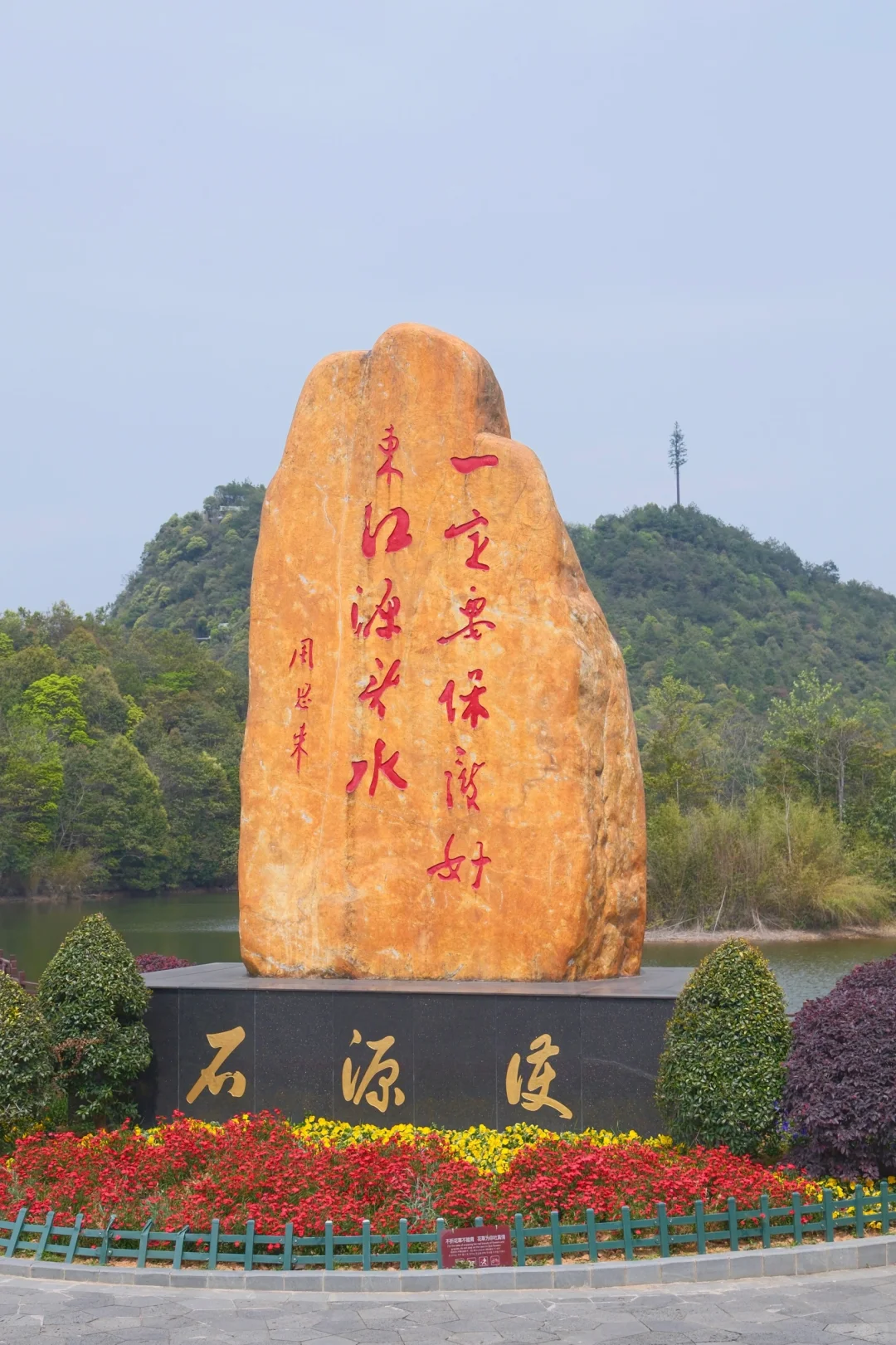
▲Guardian Stone
The Sanbaishan Mountain is the source of one of the major rivers in Guangdong Province - the Dongjiang River, and it is also one of the sources of drinking water for the people of Hong Kong.There is an old saying in ancient times: "Among the ninety-nine rivers in Jiangxi Province, only one flows to Boluo County in Guangdong Province."This means that among all the rivers in Jiangxi Province, only one flows southward to the Dongjiang River in Boluo County, while the others all flow to the Ganjiang River.This river that flows to Boluo County in Guangdong Province originated from the eastern part of Sanbaoshan Mountain and was called An Yuan Shui in ancient times.
The significance of the Dongjiang Source lies mainly in the daily water needs of Hong Kong residents, especially during severe droughts.In 1963, Premier Zhou Enlai ordered the construction of the Dongshen Water Supply System, which drew water from the Dongjiang River to alleviate the water shortage problem in Hong Kong.On March 1, 1965, the Dongshen Water Supply Project was officially put into operation.Since then, the water from the Dongjiang Source has continuously flowed into Hong Kong.
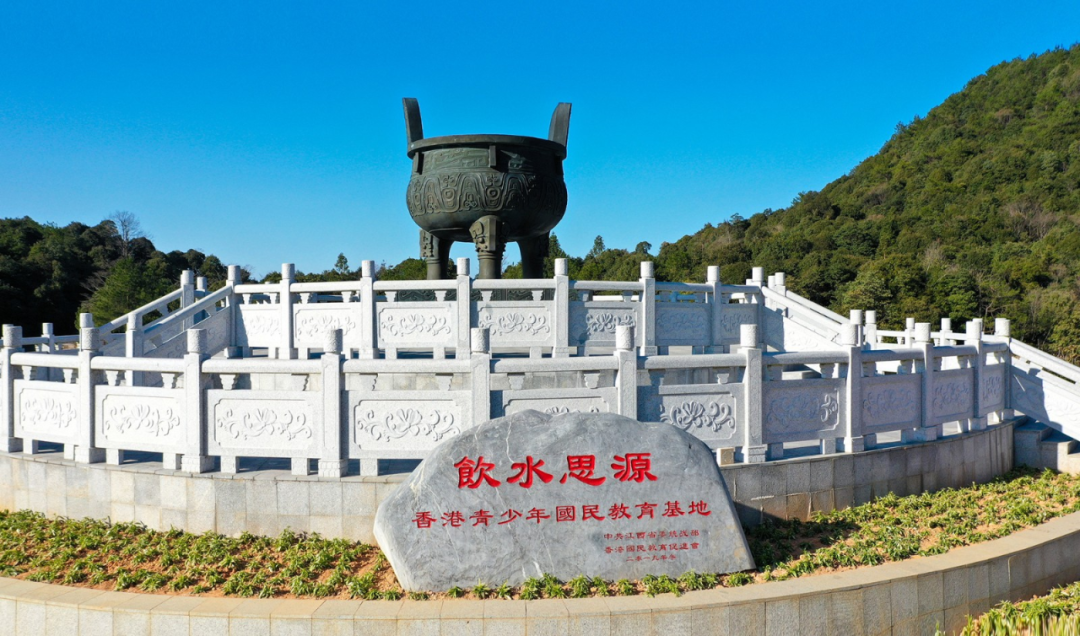
▲ Suyuan Treasure Tripod
The rebirth of Sanba Mountain
Because of the Dongjiang River source, the 300-meter-tall Sanba Mountain, which had lain dormant for millions of years, gradually awakened.
Since ancient times, relying on the mountains for sustenance has been the main way of life for people in mountainous areas.In the Sanbaoshan region, except for a few mountain dwellers who engage in small-scale handicrafts or work as peddlers, the majority of the people make a living by clearing land for farming, catching birds and hunting animals, sawing wood and burning charcoal, raising bees and collecting honey, and picking wild fruits and mushrooms.In the past, "the sound of felling trees and the chirping of birds" was the most common and exciting melody in the mountains.Although the days of "cutting firewood and burning charcoal in the mountains" were hard, using charcoal for cooking and heating and exchanging it for money and goods was certainly not a bad thing."Working in the fields during the day and spinning hemp at night, all the villagers shouldered their responsibilities at home" seemed poetic, but the joys and sorrows within it might only be known by the mountain dwellers themselves.
In summary, the main characteristics of Sanbaoshan can be described in just two words: low-key.
So low-key that even the "Yuanhe County Map Record" of the Tang Dynasty did not mention her. So low-key that even the "Taiping Empire Dictionary" of the Song Dynasty did not take her seriously. So low-key that the "Ganzhou Prefecture Record" of the Jiajing Edition of the Ming Dynasty even failed to bother to directly record her.
During the reign of Emperor Jiajing of the Ming Dynasty, Lu Hongxian, the top scholar of the imperial examination from Ji Shui, Jiangxi Province, stayed in An Yuan County for several months and visited many places.In the "Comprehensive Map" he compiled, although several mountains in An Yuan County were marked, the "Three Hundred Mountains" were not included.
It was not until the early 20th century that Sanba Mountain finally attracted people's attention with its original ecological charm.
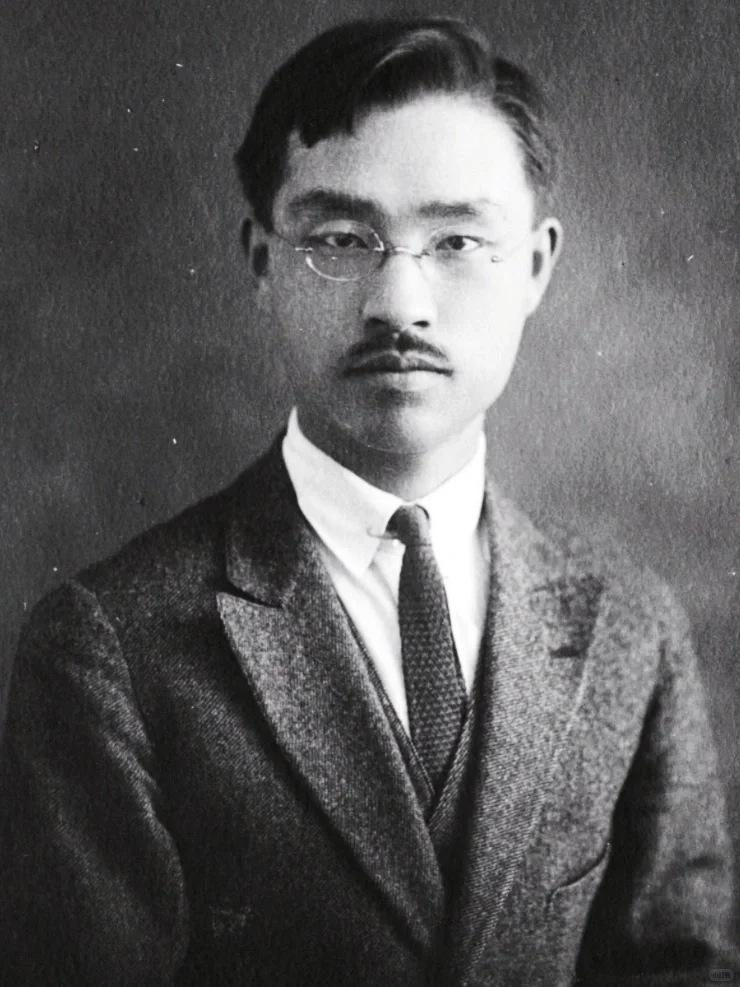
▲ Hu Xianfu
In 1921, Hu Xuanfu, the founder of Chinese botany, led a scientific expedition team from Dingnan to Anyuan, and arrived at Fengshan Village at the foot of Sanbaoshan.The purpose of this expedition was to collect plant specimens at Sanbaoshan.This scientific expedition lasted for more than a month, collecting a large number of plant specimens and ecological data. It discovered rare plants such as the spur-borne wax plum, promoting local ecological research.Hu Xuanfu's scientific expedition team also recorded the vegetation distribution and species diversity of Sanbaoshan, providing basic data for subsequent ecological protection.
Although Sanbaishan is a vast area with sparse population, it is a good place for conducting covert operations.During the Great Revolution, the red organization in Anyuan County took advantage of the deep and forested terrain in the Sanbaishan region to actively carry out revolutionary activities.Revolutionary heroes centered around Yangtian Lake gradually established the first base area in Anyuan County, firing the first shot of armed resistance against the white rule of the Kuomintang under the leadership of the local Communist Party organization of Anyuan.
The flames of revolution reddened the sky, the cries of struggle shook the earth, and awakened the slumbering Sanba Mountain!
After the founding of the People's Republic of China, the Sanbaoshan area was integrated into the tide of modern development. Various construction projects flourished, and the vast number of villagers lived in peace and contentment.
In 1990, when Chen Jianglin, then the head of the An Yuan County People's Government, was flipping through the "Cihai" and the "An Yuan County History", he discovered that the source of one of the main branches of the Pearl River - the Dongjiang - was located in Sanbaoshan. Thus, he proposed to develop tourism in Sanbaoshan.Since then, the overall planning of Sanbaoshan has been steadily advancing, and infrastructure construction and the construction of cultural landscapes have been carried out in an orderly manner."Hidden away and unknown to the public" Sanbaoshan gradually shed its mysterious veil and openly entered the public's view.
In May 2002, Sanba Mountain was approved by the State Council as a national-level key scenic area.
After numerous meticulous renovations, Sanbaoshan has changed and become even more beautiful.Tourist facilities have emerged from nothing, scenic spots have been constructed from rudimentary to refined, and transportation conditions have improved from poor to good.Cable cars have been installed, walkways have been built, and glass bridges have also been constructed.The mountain has come to life, the number of tourists has increased, its reputation has risen, and the once unknown Dongjiang Source has finally become popular.
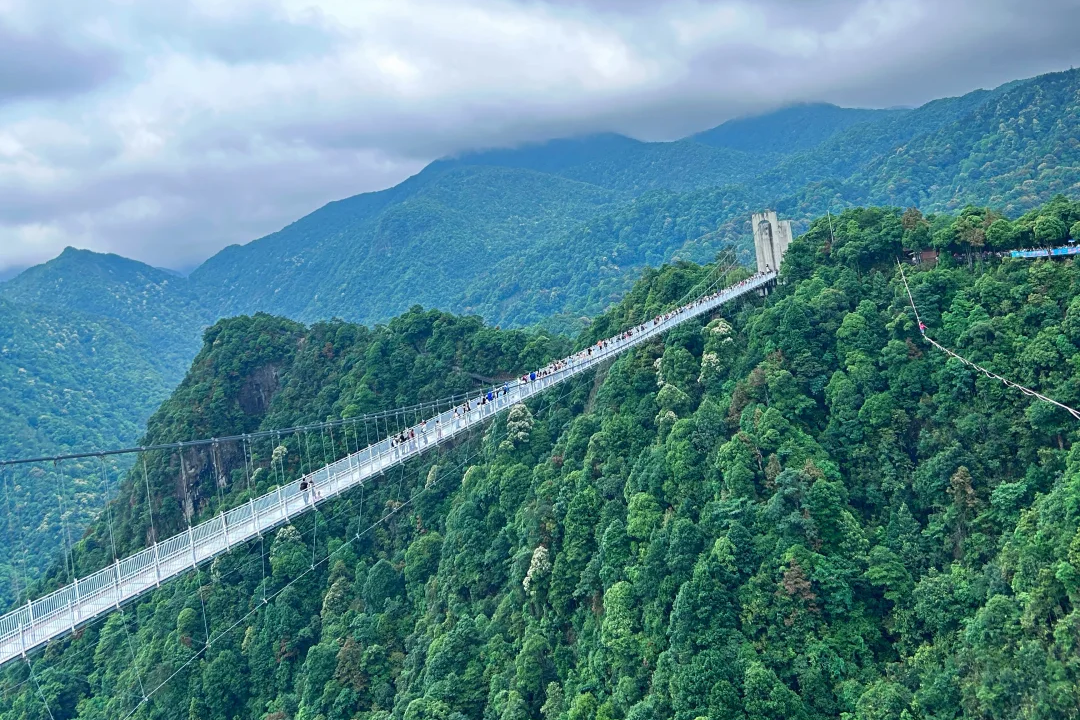
▲ Glass Bridge
In July 2022, the Sanbaoshan Scenic Area was awarded the title of National 5A-level Tourist Attraction by the Ministry of Culture and Tourism.In the same year, the Sanbaoshan received 995,800 visitors, which was 10 times the 100,000 visitors it received from 1998 to 1999 and 33 times the 30,000 visitors it received from 1992 to 1994.
The "Guan卦" of "The Book of Changes" states: "The gentleman undergoes a transformation like a leopard;his character becomes splendid." The term "leopard transformation" originally refers to the process where a young leopard gradually develops more colorful fur as it grows up. Here, it is perfectly applicable to describe the transformation and transformational beauty of Sanbaoshan.
The course of human history is full of ups and downs.Looking at it from this perspective, it is indeed so.
Source: Gan Nan Red Client App
The source of the Dongjiang River - peace is not far away in your heart
Welcome to use An Yuan One-Click Game.
↓↓↓↓




编校(审):唐 婕、赵 堃

 关注微博
关注微博

 关注微信
关注微信

 微信小程序
微信小程序
